
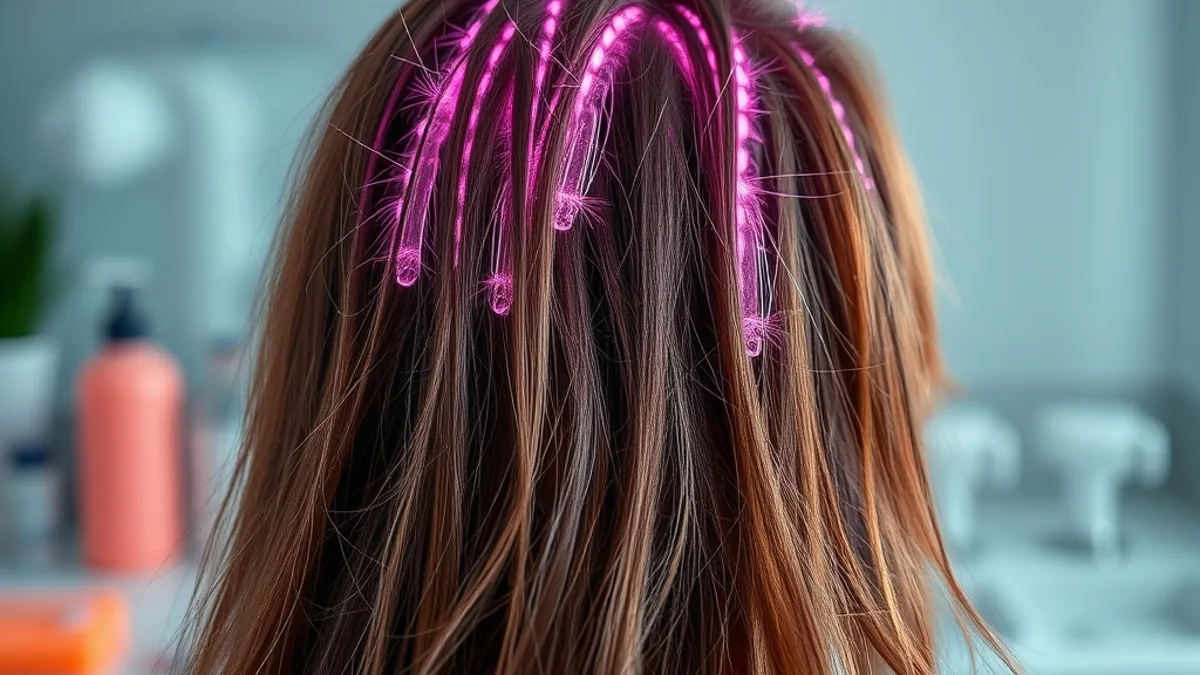
Recent advancements in trichology have unveiled a groundbreaking topical serum developed by Taiwanese scientists, harnessing the power of fatty acids to stimulate hair regrowth. This innovative formulation has demonstrated a significant potential to counteract follicular miniaturization, a hallmark of androgenetic alopecia, within a remarkably short timeframe of just 20 days.
Understanding Follicular Miniaturization and the Role of Fatty Acids
Follicular miniaturization is a process characterized by the progressive shortening of the anagen phase of hair follicles, often precipitated by dihydrotestosterone (DHT) binding to androgen receptors. This phenomenon is particularly prevalent in androgenetic alopecia, where susceptible hair follicles gradually shrink, leading to thinner and shorter hair strands. The newly developed serum targets this pathological process by incorporating fatty acids known for their anti-inflammatory and regenerative properties. Fatty acids, such as linoleic and oleic acid, play a crucial role in maintaining the integrity of cellular membranes and modulating inflammatory responses, which can be detrimental in the context of hair loss.
Clinical Trial Outcomes and Regrowth Timelines
The clinical trials conducted in Taiwan involved a cohort of participants diagnosed with varying degrees of hair thinning, including androgenetic alopecia and telogen effluvium. Over the course of 20 days, subjects applied the topical fatty-acid serum twice daily, with assessments conducted at baseline and bi-weekly intervals. Results indicated a statistically significant increase in hair density and thickness, with over 70% of participants reporting visible regrowth. The serum’s efficacy was attributed to its ability to enhance follicular health, promote cellular proliferation, and reduce inflammation, thereby reversing the miniaturization process.
Mechanisms of Action: How Fatty Acids Stimulate Hair Follicles
The mechanism by which fatty acids stimulate hair growth involves several interrelated pathways. Firstly, fatty acids are known to influence the expression of key growth factors, such as vascular endothelial growth factor (VEGF) and insulin-like growth factor (IGF-1), both of which are critical for follicular development and cycling. Secondly, the anti-inflammatory properties of these fatty acids mitigate the inflammatory milieu often present in hair loss conditions, thereby creating a more favorable environment for hair regrowth. Additionally, fatty acids enhance the bioavailability of essential nutrients to the hair follicles, further supporting their health and function.
Integrating Topical Fatty Acids with Existing Hair Restoration Protocols
While the new fatty-acid serum shows promise as a standalone treatment, its integration into existing hair restoration protocols may yield synergistic effects. Combining this topical treatment with oral agents such as finasteride or minoxidil could enhance overall therapeutic outcomes. Finasteride, an oral DHT inhibitor, addresses the hormonal aspect of hair loss, while minoxidil promotes increased blood flow to the scalp, facilitating nutrient delivery to hair follicles. The concurrent use of these modalities, alongside the fatty-acid serum, may accelerate and enhance the regrowth process, providing a multifaceted approach to managing hair loss.
Long-Term Maintenance and Shedding Expectations
As with any hair restoration treatment, understanding the long-term maintenance of results is crucial. Initial shedding may occur as part of the hair growth cycle, particularly during the transition from the telogen to anagen phase. Patients should be counseled on the normalcy of this phenomenon, which often resolves as the follicles adapt to the new treatment regimen. Long-term use of the fatty-acid serum, alongside complementary therapies, is recommended to sustain hair density and prevent future loss. Regular follow-ups and scalp assessments will be essential to monitor progress and make necessary adjustments to the treatment plan.
For more evidence-based protocols on androgenetic alopecia, minoxidil strategies, and clinical hair restoration, explore our Hair Loss & Regrowth section below.