
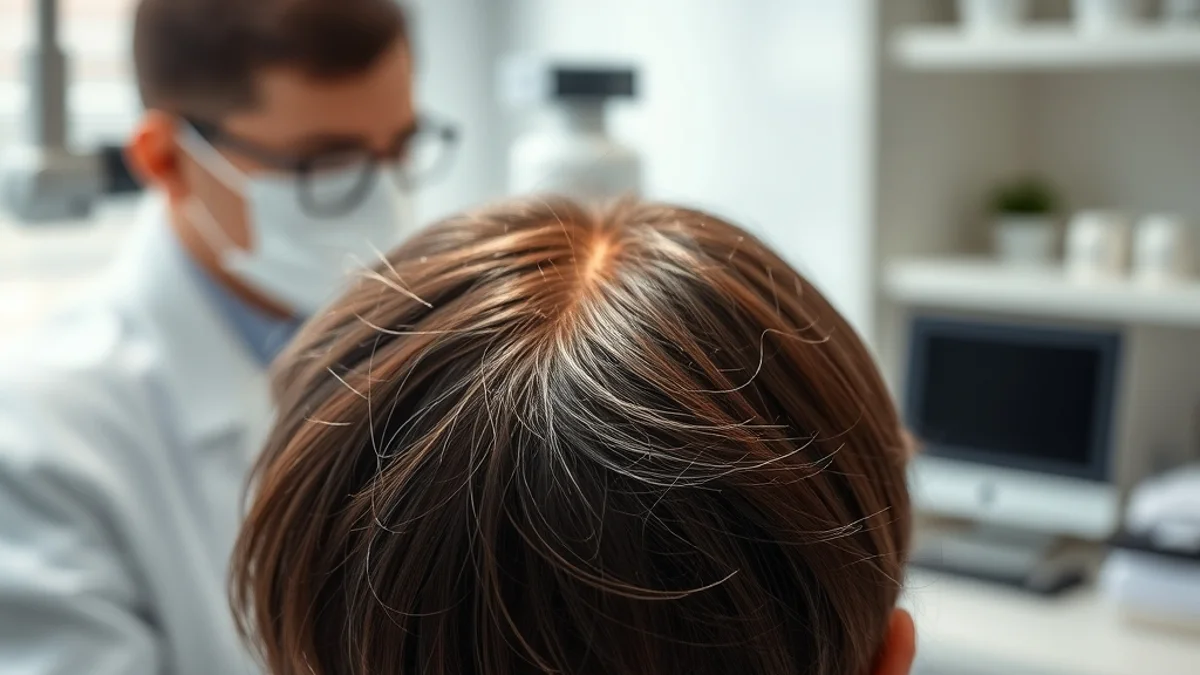
Varun Dhawan’s recent endorsement of hair oiling has reignited discussions around traditional practices like Janhvi Kapoor’s champi routine, prompting a closer examination of the scientific underpinnings of hair oiling. This editorial delves into the clinical implications of hair oiling frequency, exploring its impact on scalp health, hair growth, and the integration of modern trichological innovations.
Mechanisms of Scalp Health: The Role of Sebum and Essential Oils
Understanding the biological significance of scalp health is pivotal in evaluating hair oiling practices. The scalp’s natural sebum production plays a crucial role in maintaining the integrity of hair follicles. Sebum, produced by sebaceous glands, provides a protective barrier against environmental stressors and maintains moisture levels, which are essential for optimal hair growth. Essential oils, often incorporated in hair oil formulations, possess antimicrobial properties that can mitigate scalp conditions such as dandruff and seborrheic dermatitis. Regular application of oils can enhance sebum distribution, promoting a balanced scalp microbiome and potentially reducing inflammation.
Photobiomodulation: Enhancing Hair Follicle Activity through Light Therapy
Recent advancements in low-level light therapy (LLLT) have shown promising results in stimulating hair follicles. Photobiomodulation works by enhancing mitochondrial activity within hair follicle cells, leading to increased ATP production. This process not only promotes cellular proliferation but also enhances the overall health of hair follicles. When combined with traditional oiling practices, LLLT may amplify the benefits of oil application, creating a synergistic effect that improves hair density and thickness. Clinical studies have demonstrated that integrating LLLT with topical treatments can lead to significant improvements in hair regrowth, particularly in androgenetic alopecia.
Exosomal Therapeutics: The Future of Hair Restoration
Exosomes, nano-sized vesicles secreted by cells, have emerged as a revolutionary component in hair restoration therapies. They play a vital role in intercellular communication, facilitating the transfer of growth factors and proteins essential for hair follicle activation. Recent research indicates that exosomal treatments can enhance the efficacy of traditional hair oiling by delivering bioactive molecules directly to the hair follicles. This targeted approach not only stimulates hair growth but also improves the overall health of the scalp. The integration of exosomal therapies with routine oiling practices could redefine hair restoration protocols, offering patients a multifaceted approach to combating hair loss.
Patient-Centric Approaches: Tailoring Oil Application Frequency
Determining the optimal frequency of hair oiling is not a one-size-fits-all solution. Individual factors such as hair type, scalp condition, and lifestyle play a significant role in establishing a personalized regimen. For patients with oily scalps, infrequent oiling may be advisable to prevent excess sebum buildup, while those with dry or damaged hair may benefit from more frequent applications. Clinical assessments should guide recommendations, taking into account the patient’s unique hair and scalp characteristics. Additionally, the incorporation of advanced diagnostic tools, such as scalp imaging, can provide insights into follicular health, allowing for tailored treatment plans that optimize the benefits of oiling.
Comparative Analysis of Traditional Oil Treatments and Modern Therapies
When evaluating the efficacy of traditional hair oiling against contemporary treatments such as minoxidil or finasteride, it is essential to consider both qualitative and quantitative outcomes. While traditional oils may offer moisturizing and soothing benefits, modern pharmacological treatments often provide more pronounced results in terms of hair regrowth. However, the integration of natural oil treatments can enhance patient compliance and satisfaction, particularly when used in conjunction with clinical therapies. Comparative studies indicate that combining traditional practices with advanced treatments can yield superior outcomes, maximizing both hair density and scalp health.
In conclusion, the resurgence of interest in hair oiling, spurred by celebrity endorsements, presents an opportunity to bridge traditional practices with cutting-edge clinical innovations. By understanding the mechanisms behind scalp health and hair growth, practitioners can develop personalized treatment protocols that leverage both natural and advanced therapeutic options. As the field of trichology continues to evolve, integrating these insights will be crucial in providing patients with comprehensive care tailored to their unique needs.
To stay informed on modern bond repair chemistry, peptide innovations, and clinical trichological research, continue reading our Clinical Hair Science section below.