
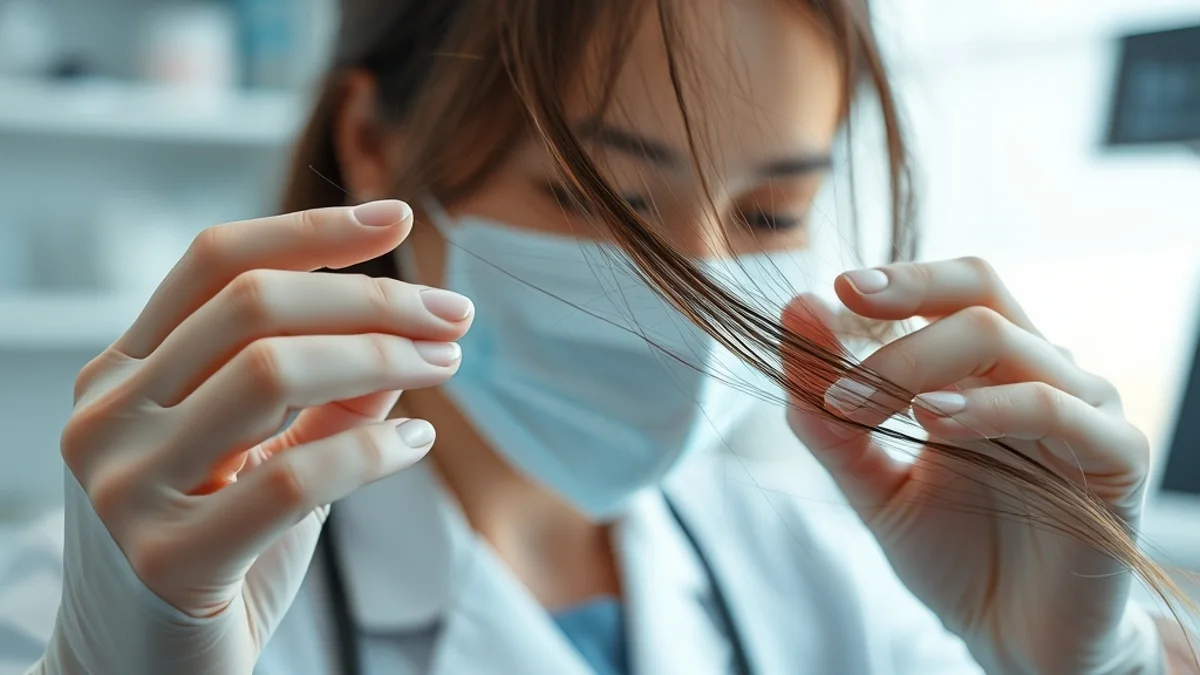
The biological underpinnings of hair loss, particularly in conditions such as androgenetic alopecia and telogen effluvium, are complex and multifactorial. Recent discussions surrounding a $17 shampoo claiming to reverse hair loss have prompted scrutiny from dermatological experts. This editorial aims to dissect the claims, focusing on the mechanisms of follicular miniaturization and the role of active ingredients in hair regrowth.
Follicular Miniaturization and DHT Receptors
Androgenetic alopecia (AGA), commonly referred to as male or female pattern hair loss, is characterized by the progressive miniaturization of hair follicles. This process is primarily driven by dihydrotestosterone (DHT), a potent androgen derived from testosterone. DHT binds to androgen receptors in susceptible hair follicles, leading to a shortening of the anagen phase and an elongation of the telogen phase. Over time, this results in thinner, shorter hairs that are eventually replaced by vellus hairs, contributing to visible hair thinning. Understanding this mechanism is crucial when evaluating any topical treatment’s efficacy, including the aforementioned shampoo.
Active Ingredients: Mechanisms of Action
While the specific formulation of the $17 shampoo in question may not be publicly disclosed, many hair loss shampoos contain active ingredients such as ketoconazole, saw palmetto, and caffeine, each with varying degrees of evidence supporting their efficacy. Ketoconazole, an antifungal agent, has shown anti-androgenic properties that may help reduce DHT levels on the scalp. Saw palmetto, a botanical extract, is thought to inhibit the conversion of testosterone to DHT, although clinical evidence remains inconclusive. Caffeine, on the other hand, has been suggested to stimulate hair follicles by enhancing blood circulation and prolonging the anagen phase. A thorough review of these ingredients and their concentrations is essential to ascertain the potential of the shampoo in reversing hair loss.
Clinical Trial Outcomes and Regrowth Timelines
Clinical trials assessing the efficacy of topical agents for hair regrowth typically measure outcomes such as hair count, hair thickness, and patient-reported satisfaction over defined periods. For instance, minoxidil, a well-established topical treatment for AGA, has demonstrated significant results in various studies, with noticeable regrowth often observed within 12 weeks of consistent use. However, the timeline for visible results can vary based on individual biological factors, including the severity of hair loss and adherence to treatment protocols. In contrast, the efficacy of the $17 shampoo remains largely anecdotal, with limited peer-reviewed studies to substantiate its claims. Therefore, patients should approach such products with caution and consider evidence-based alternatives.
Therapeutic Synergy Between Topicals and Oral Agents
For patients experiencing significant hair loss, a multifaceted approach often yields the best outcomes. Combining topical treatments like minoxidil with oral agents such as finasteride can enhance therapeutic efficacy. Finasteride works by inhibiting the enzyme 5-alpha-reductase, thereby reducing DHT levels systemically. This synergistic effect can lead to improved hair density and regrowth compared to monotherapy. While the $17 shampoo may offer some benefits as a supplementary treatment, it should not replace established therapies that have undergone rigorous clinical evaluation.
Long-Term Maintenance and Shedding Expectations
Understanding the long-term maintenance of hair regrowth is vital for patients. After achieving desired results with treatments, many individuals experience a phenomenon known as “shedding,” where previously dormant hair follicles enter the telogen phase. This can be alarming; however, it is often a normal part of the hair growth cycle and may indicate that the follicles are responding to treatment. Continuous use of effective therapies is essential to maintain results, as discontinuation can lead to a return to baseline hair loss. The role of the $17 shampoo in this context remains to be fully elucidated, necessitating further research to determine its place in a comprehensive hair restoration regimen.
For more evidence-based protocols on androgenetic alopecia, minoxidil strategies, and clinical hair restoration, explore our Hair Loss & Regrowth section below.