
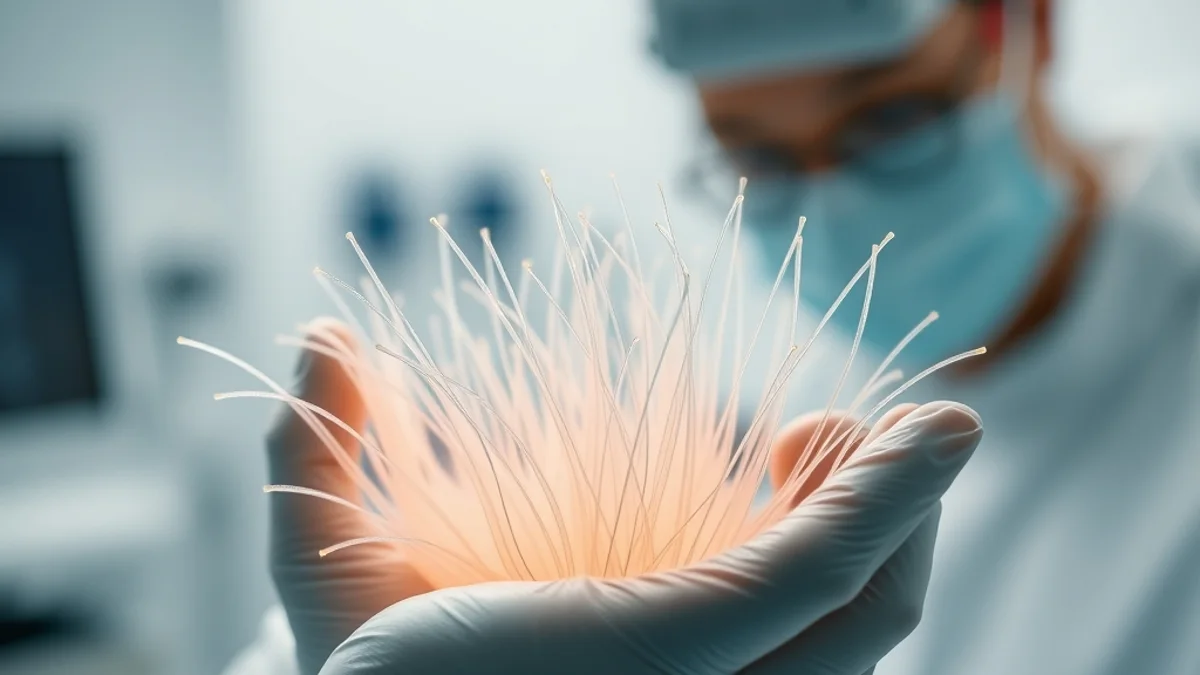
The recent discovery of an electric comb that regrows nearly all lost hair in balding mice within just 30 days has opened new avenues in trichology. This innovative device appears to stimulate hair follicles through a combination of electrical stimulation and possibly enhanced blood flow, addressing the underlying biological mechanisms of hair loss.
Follicular Miniaturization and DHT Receptors
Understanding the biological basis of hair loss is crucial for effective treatment. In androgenetic alopecia, a common form of hair loss, follicular miniaturization occurs due to the action of dihydrotestosterone (DHT) on androgen receptors in hair follicles. DHT, a potent androgen derived from testosterone, binds to these receptors, leading to a progressive shortening of the hair growth cycle and a decrease in hair follicle size. This process results in thinner, shorter hairs and, ultimately, hair loss. The electric comb’s mechanism may counteract these effects by stimulating hair follicles, potentially disrupting the DHT-receptor interaction and promoting healthier hair growth.
Mechanisms of Action: Electrical Stimulation and Follicular Activation
The electric comb operates on principles of electrical stimulation, which has been shown to enhance cellular activity and promote hair follicle regeneration. This stimulation may increase blood flow to the scalp, delivering essential nutrients and oxygen to hair follicles, thereby revitalizing their function. Recent studies suggest that electrical stimulation can activate signaling pathways involved in hair growth, such as the Wnt/β-catenin pathway, which plays a pivotal role in hair follicle development and cycling. The comb’s application may also encourage the proliferation of dermal papilla cells, which are critical for hair follicle formation and maintenance.
Clinical Trial Outcomes and Regrowth Timelines
Initial preclinical trials involving the electric comb have demonstrated promising results, with significant hair regrowth observed in treated mice. Within 30 days, nearly complete restoration of hair density was noted, suggesting rapid follicular activation. While these results are compelling, further clinical trials in human subjects are essential to validate efficacy and safety. The timelines for hair regrowth in humans may vary based on individual factors such as age, genetic predisposition, and the severity of hair loss. Typically, patients can expect to see initial signs of regrowth within 12 to 16 weeks of consistent treatment, although complete results may take several months to manifest.
Therapeutic Synergy Between Topicals and Oral Agents
While the electric comb shows promise as a standalone treatment, its efficacy may be enhanced through synergistic use with topical and oral agents. Minoxidil, a topical vasodilator, and finasteride, an oral DHT inhibitor, are commonly prescribed for androgenetic alopecia. Combining these treatments with electrical stimulation could potentially maximize hair regrowth outcomes by addressing multiple pathways involved in hair loss. For instance, while the electric comb may stimulate hair follicles directly, minoxidil can enhance blood flow and nutrient delivery, and finasteride can mitigate the hormonal influences of DHT. This multifaceted approach may provide a more comprehensive solution for patients experiencing hair thinning.
Long-Term Maintenance and Shedding Expectations
As with any hair restoration treatment, understanding long-term maintenance and potential shedding is vital for patient satisfaction. Following initial regrowth, patients may experience a phenomenon known as “shedding,” where previously dormant hairs fall out as new ones emerge. This is a normal part of the hair growth cycle and should not be misconstrued as treatment failure. Long-term maintenance typically requires ongoing use of the electric comb, along with any adjunctive therapies, to sustain hair density and prevent further loss. Regular follow-up consultations with a trichologist can help tailor treatment plans and address any concerns that arise during the maintenance phase.
In conclusion, the electric comb represents an exciting development in trichology, offering hope for those affected by hair loss. As research continues to unfold, it is essential for patients to remain informed and engaged in their treatment journeys. The integration of innovative technologies with established therapies may pave the way for more effective and personalized hair restoration solutions.
For more evidence-based protocols on androgenetic alopecia, minoxidil strategies, and clinical hair restoration, explore our Hair Loss & Regrowth section below.