
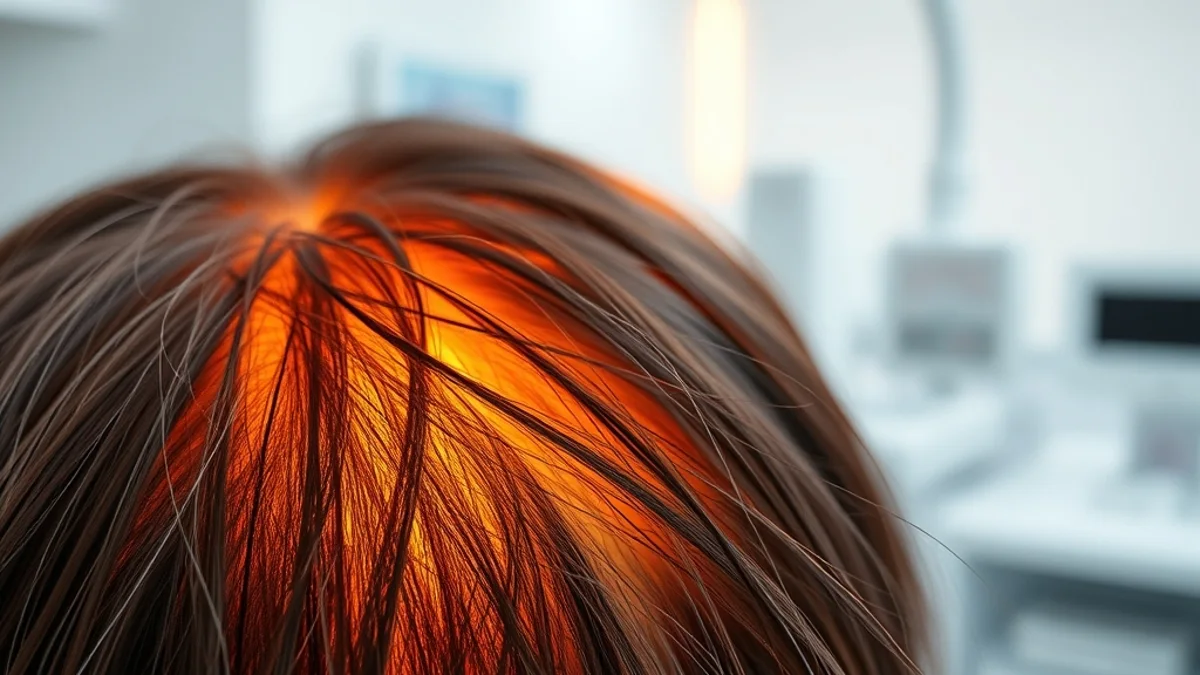
The festive season often brings joy, but it can also introduce significant stressors that contribute to hair fall, scalp irritation, and styling damage. Understanding the underlying biological mechanisms and advanced clinical interventions can empower individuals to maintain their hair health amidst the holiday hustle.
Photobiomodulation: Enhancing Cellular Repair and Mitigating Stress
Photobiomodulation (PBM), commonly known as low-level light therapy (LLLT), utilizes specific wavelengths of light to stimulate cellular processes. This non-invasive technique enhances mitochondrial function, leading to increased ATP production, which is critical for hair follicle health. Studies have demonstrated that PBM can reduce inflammation and oxidative stress in the scalp, thereby promoting a healthier environment for hair growth.
During the festive season, factors such as environmental changes, increased styling, and stress can exacerbate hair fall. PBM addresses these issues by enhancing blood circulation to the scalp and promoting the proliferation of dermal papilla cells, which play a pivotal role in hair follicle cycling. Clinical trials have shown that patients undergoing PBM treatment experience a significant reduction in hair thinning and improved overall scalp health.
Exosomal Therapy: Revolutionizing Hair Restoration
Exosomes, small extracellular vesicles secreted by cells, have emerged as a groundbreaking therapeutic avenue in trichology. They facilitate intercellular communication and can carry growth factors, proteins, and genetic material that promote hair follicle regeneration. Recent research indicates that exosomal therapy can enhance the activation of follicular stem cells, leading to improved hair density and thickness.
In the context of seasonal hair stress, exosomal treatments can counteract the adverse effects of styling damage and environmental stressors. By delivering a concentrated dose of regenerative signals directly to the scalp, exosomes can rejuvenate dormant hair follicles and stimulate new growth. Clinical studies have reported promising outcomes, with patients experiencing noticeable improvements in hair quality and scalp vitality following exosomal interventions.
Growth Factor Applications: Targeting Follicular Health
Growth factors are pivotal in regulating cellular functions, including proliferation, differentiation, and survival of hair follicle cells. The application of growth factor serums has gained traction as a non-surgical approach to combat hair loss and scalp issues. Key growth factors such as vascular endothelial growth factor (VEGF) and fibroblast growth factor (FGF) have been shown to enhance angiogenesis and stimulate hair follicle activity.
During the festive season, the combination of styling stress and environmental factors can lead to hair weakening. Topical application of growth factors can mitigate these effects by promoting a robust hair growth cycle. Clinical trials have demonstrated that patients receiving growth factor treatments exhibit increased hair density and improved scalp health, making it a viable option for those seeking to maintain their hair during high-stress periods.
Robotic-Assisted Follicular Unit Extraction: Precision in Hair Restoration
Robotic-assisted follicular unit extraction (FUE) represents a significant advancement in hair restoration techniques. This minimally invasive surgical procedure utilizes robotic technology to enhance the precision of hair follicle harvesting, resulting in reduced trauma to the scalp and improved graft survival rates. As festive styling often leads to increased hair manipulation, robotic FUE offers a reliable solution for individuals seeking to restore their hair with minimal downtime.
Clinical data supports the efficacy of robotic FUE, with patients reporting high satisfaction rates and natural-looking results. The precision of robotic systems allows for tailored extraction patterns that can accommodate individual scalp characteristics, ensuring optimal hair density and coverage. As the demand for advanced hair restoration techniques grows, robotic FUE stands out as a cutting-edge option for those facing hair loss during the holiday season.
Integrative Approaches: Combining Therapies for Optimal Outcomes
Given the multifactorial nature of hair loss, an integrative approach combining various therapies may yield the best results. The synergistic effects of PBM, exosomal therapy, growth factors, and robotic-assisted techniques can provide a comprehensive strategy to combat hair fall and scalp stress. By tailoring treatment plans to individual patient needs, clinicians can optimize outcomes and enhance patient satisfaction.
As we navigate the festive season, it is crucial to consider the cumulative impact of stress, styling, and environmental factors on hair health. A personalized treatment regimen that incorporates advanced clinical innovations can effectively address these challenges, ensuring that individuals maintain their hair vitality and confidence throughout the holidays.
To stay informed on modern bond repair chemistry, peptide innovations, and clinical trichological research, continue reading our Clinical Hair Science section below.